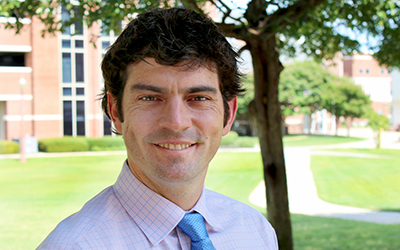
William A. Walker III

Pastor, Professor, Theologian, Spiritual Director

Month: August 2013

Two Admonitions regarding Christian Responsibility for Nationalism and the Ecological Crisis

American preachers have a task more difficult, perhaps, than those faced by us under South Africa’s apartheid, or Christians under Communism. We had obvious evils to engage; you have to unwrap your culture from years of red, white, and blue myth. You have to expose, and confront, the great disconnection between the kindness, compassion, and caring of most American people, and the ruthless way American power is experienced, directly and indirectly, by the poor of the earth. You have to help good people see how they have let their institutions do their sinning for them. This is not easy among people who really believe that their country does nothing but good, but it is necessary, not only for their future, but for us all.

Peter Storey

Our present ecological crisis, the biggest single practical threat to our human existence in the middle to long term, has, religious people would say, a great deal to do with our failure to think of the world as existing in relation to the mystery of God, not just as a huge warehouse of stuff to be used for our convenience.

Related articles

The Atonement Theology of Ronald Goetz

I’ve learned about Ronald Goetz (1933-2006) through Christian Century Magazine.  The following is taken from ronaldgoetz.com:

Why did Jesus Christ have to die? Why is there need for atonement between God and humans? From the earliest times, Christian theologians East and West linked the need for atonement to the fall of Adam and Eve. Augustine of Hippo, for example, held that the consequences of Adam’s sin were catastrophic for all creation. It is due to Adam’s sin, Augustine wrote, that “human nature was made subject to all the great corruption that we see and feel, and so to death also.” As a consequence, the first humans “came to be disturbed by turbulent and conflicting emotions, and so became very different from what [they] had been when [they] dwelt in Paradise before [their] sin” (Civ. Dei 14.12; Dyson translation). Decay, death, evil—Adam’s sin brought all this into what had been a peaceful and perfectly ordered earthly creation. Some version of Augustine’s teaching on the fall and original sin has remained, even to this day, essential to virtually every Christian doctrine of sin and so to every theory of the atonement.

Goetz believed that such ideas were no longer sustainable. Our theological ancestors could take the historicity of the Genesis creation narratives for granted. We cannot. The natural history of life on earth tells a different story. Human sin, Goetz argues, did not make the world what it is. Human beings, with all sentient life, have from their first appearance been engaged in an unremitting struggle for survival. Humanity, evolving in a world in which violence and violent struggle are the bases and inescapable preconditions of existence, inherited a tendency to sin before it could make a choice between good and evil. In such a world—a world in bondage to decay—sin and death cannot be the result of our first parents’ perversion of their freedom; rather, they are a function of biological existence, an epiphenomenon of creation. In short, while it may be said that human beings are responsible in their bondage to sin, it cannot be said that human beings are responsible for their bondage to sin. What is more, the creation that God declared good, the creation to which God has bound himself irreversibly in the freedom of his love, and which God intends to bring to consummation, is not the fictional world of the Augustinian imagination. It is this creation, this world, a world that God, as part of his ultimate purpose, created as it is—transitory, incomplete, and bound to decay and death.

Yet if this is the case, then it is not human sin, but divine responsibility that is the first consideration—indeed the decisive consideration—in diagnosing the need for atonement. Atonement—at-one-ment, the drawing together and reconciliation of God and humanity—is not a one‑way street.

Goetz’s atonement theology is grounded from first to last in the love and sovereignty of God. In eternity, God chose human beings for fellowship with himself. Creation is an outflowing of divine love: Human beings, created in God’s image, are to be united to God, raised from temporality and finitude and granted a share in God’s eternal being. This, for Goetz, is the gospel: that the God who loves in freedom wills to bestow the gift of God’s own life on humanity. A destiny so glorious can only be a gift of divine grace. But it is a gift given with a task. God’s will is that humans should be co‑creators of their own being in free partnership with God. There is no creativity without pain and sacrifice. And so it would be for God’s beloved. Human creatures, with God as their Lord, partner and friend, would forge their being in the crucible of struggle and finitude. All of what humanity and creation must endure in being prepared for their ultimate destiny with God, the “weal” as well as the “woe,” is part of God’s sovereign purpose—and hence God’s ultimate responsibility (Isa. 45:7).

Such ideas lead Goetz to [an alternative] theory of the atonement. Atonement is an act of divine solidarity, sacrifice, and reconciliation, manifested and effected in the life, death and resurrection of Jesus Christ, in which God not only atones for human sin, but makes atonement to an anguished and suffering humanity for what God has permitted in pursuit of his purpose. “All alienation, all hostility, all outrage finally comes to focus in the God‑man. He bears human sin—and God’s anger. He bears evil’s onus—and human anger.” “The cross,” writes Goetz, “is not only the focal point of divine wrath against us; it is also the focal point of human rage against God.” Atonement is not one‑sided; atonement is reciprocal.

 

Who is responsible for the living wage?

The Catholic Social Teachings tradition provides a compelling case for there to be a living wage.

What is the Gospel?

As in the previous post about salvation, no matter how familiar it is or how much we think we know it, I always find it worthwhile to ask the question again and again, What is the Gospel?  My friends over at interlocutors: a theological dialogue are doing just this.  Here is link to a recent post by Yi Shen Ma, a very bright guy who really helped me learn during my time in graduate school at Claremont.

Global Justice, Christology and Christian Ethics

“Global realities of human inequality, poverty, violence and ecological destruction call for a 21st-century Christian response that can link the power of the gospel to cross-cultural and interreligious cooperation for change.”

“[R]eligious experience of God carries a moral way of life as its equally original counterpart.  This is because inclusive community with other human beings is a constitutive dimension of community with God.  “Love the Lord your God with your whole heart, mind, and soul; and your neighbor as yourself” (Mark 12:28-34).  Love God and neighbor — not God then neighbor.”

“To experience salvation is to have one’s life completely reoriented In relation to God and simultaneously integrally In relation to other human beings.  Authentic religious experience — salvation — Is inherently transformative and political.  Reconciled human relations are lenses through which we glimpse the goodness and power of God.”

“The term salvation connotes an actual healing of sin as idolatry, selfishness and violence.”

“If God’s full incarnation in human existence is a fact, and resurrection life a present reality, then Christian politics must be, can be, and is transformative of its social world.”

“To proclaim that God is truly present in Jesus Christ, [then,] and that in Christ humans reconciled to God, is to commit oneself to personal and political ways of life coherent with the reign of God that Jesus inaugurates.”

Lisa Sowle Cahill, from chapter one of Global Justice, Christology and Christian Ethics

Kierkegaard's Passionate Individual Inwardness

Uncertainty - more work to do

“An objective uncertainty held fast in an appropriation process of the most passionate inwardness is the truth, the highest truth attainable for an existing individual . . . The truth is precisely the venture which chooses an objective uncertainty with the passion of the infinite.  I contemplate the order of nature in the hope of finding God, and I see omnipotence and wisdom; but I also see much else that disturbs my mind and excites anxiety.  The sum of all this is an objective uncertainty.  But it is for this very reason that the inwardness becomes as intense as it is, for it embraces this objective uncertainty with the entire passion of the infinite . . . Without risk there is no faith.  Faith is precisely the contradiction between the infinite passion of the individual’s inwardness and the objective uncertainty.” p. 182

“Existence is the child that is born of the infinite and the finite, the eternal and the temporal, and is therefore a constant striving.” p. 84

“An existing individual is himself in process of becoming . . . In existence the watchword is always forward.”  p. 368

Kierkegaard, Concluding Unscientific Postscript

Themes in Richard Rohr's Teachings

As usual, Rohr has me thinking.  There may be more to say here, as well as things that could be said differently (e.g., the usefulness of a healthy fear of God — especially when it comes to justice… and I don’t like that way he talks about “the goal of all religion,” leaving out the distinctively Christian notion of the Kingdom of God for instance), but this list nonetheless strikes me as profound and impressively comprehensive:

1. Scripture as validated by experience, and experience as validated by Tradition are good scales for one’s spiritual world view (METHODOLOGY).

2. If God is Trinity and Jesus is the face of God, then it is a benevolent universe. God is not someone to be afraid of, but is the Ground of Being and on our side (FOUNDATION).

3. There is only one Reality. Any distinction between natural and supernatural, sacred and profane, is a bogus one (FRAME).

4. Everything belongs, and no one needs to be scapegoated or excluded. Evil or Untruth cannot be directly fought or separated from as much as exposed to the Light (ECUMENICAL).

5. The “separate self” is the major problem, not the shadow self which only takes deeper forms of disguise (TRANSFORMATION).

6. The path of descent is the path of transformation. Darkness, failure, relapse, death, and woundedness are our primary teachers, rather than ideas or doctrines (PROCESS).

7. Reality is paradoxical and complementary. Non dual thinking is the highest level of consciousness. Divine union, not private perfection, is the goal of all religion (GOAL).

Taken from Rohr’s website here.

Powered by WordPress & Theme by Anders Norén