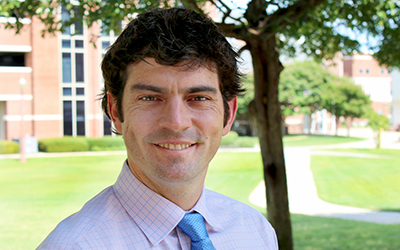
William A. Walker III

Pastor, Professor, Theologian, Spiritual Director

Month: October 2019

My Book: A Theology of the Drug War

My first monograph, A Theology of the Drug War: Globalization, Violence and Salvation, will be released November 15, 2019. Here is the publisher’s page and Amazon page.

Those who have been following my work for any length of time knows that this has been in the making for a while. I began writing one of the chapters in 2011! With all that’s happened at the border and with theCentral American refuge and asylum-seeker crisis at the southern border of the United States in the past several years, however, a number of updates have been made to reflect these developments. Still, the majority of the book remains focused on trends that have been observable for at least a decade — as far as the economic and political side of the research is concerned. Theologically, my hope is that what I set forth remains sound and timely no matter how the drug war might change.

A less expensive paperback and ebook version should be available soon! I owe a big thanks to many people who I mention in the preface, but I’m especially grateful recently to the those who offered brief reviews and endorsements below and on the book itself.

Overview

This book is a political and theological reflection on the violence and injustice that has taken place in Mexico and Central America since 2006 as a result of the drug war. In order to understand and respond to this conflict in the age of globalization, William A. Walker III combines the work of philosopher Enrique Dussel and theologian Hans Urs von Balthasar to develop a theology of the drug war that transcends both a Eurocentric conception of the world and a merely political account of salvation. Walker also highlights examples of Christian and church-based approaches to practicing neighborliness and resistance to drug trade-related violence, challenging both Christians and non-Christians to participate in the creation of a more just and merciful society.

Reviews and Endorsements:

Under the duress of the current political context, A Theology of the Drug War is a much-needed contribution. Bill Walker goes beyond the reductionist materiality in liberationist analysis and employs decolonial frameworks to unveil problems ignored by superficial readings of the “US-Mexico” drug war. Walker’s transmodern approach to the theology of salvation opens what have been unimagined avenues of inquiry and commitment, not only for our current context, but also for the generations to come. This is a must read for the academic and church guilds interested in decolonial and postcolonial theologies, border studies, American domestic and foreign policy, international relations, Latin-American and Latinx studies, liberation theologies, religion and conflict studies, and global ethics.

Santiago Slabodsky, Hofstra University

What does it mean to speak of ‘salvation’ amidst the horrors of the ‘drug war’ in Mexico? Walker addresses this pressing question, combining acute cultural analysis with sophisticated theological reflections. Drawing on a broad range of thinkers and on concrete examples of nonviolent resistance, Walker presents a vision of salvation that is neither simply spiritual nor simply political, neither simply otherworldly nor simply thisworldly. It is rather Incarnational, illustrating the ways that God suffers not simply with, but for, the victims of exploitation and violence.

William T. Cavanaugh, DePaul University

We are living in a world overwhelmed with global economic forces bigger than ourselves. Even so, Walker unfolds the call of every Christian to solidarity with the suffering. Delving deep into the theologies of Dussel, Sobrino, Moltmann, Balthasar and many others, his Theology of the Drug War sculpts a political theology of both neighborliness and resistance that can shape our churches for this new political moment. Stunning in scope and potent for our times, I see this book as a testament for what could be.

David Fitch, Northern Seminary, Chicago

Perhaps here is the book that many have been missing and waiting for, a political theology of our time and our very day, a theology that is thoroughly theological, not a sociology in disguise, but a theology that is deeply immersed in the sufferings of our globalizing world, especially in its typically North American form, the human sufferings of the drug war along the Mexican border, but also a theology that mediates context and concern in a methodologically sound way proper to theology. Walker has produced a book that is thoroughly theological and thoroughly political, a theology that is neither premodern nor postmodern but transmodern, a theology that integrates the politics of imperialism and eschatology of transcendence, a theology that takes seriously the suffering of the poor in history as elaborated in the ethics and theologies of Enrique Dussell, Jon Sobrino, and Ignacio Ellacuria, but also takes just as seriously the aesthetics of Hans Urs von Balthasar with its emphasis on contemplating things with “the eyes of faith.” I heartily and proudly recommend this book to anyone searching for an inspiring synthesis of faith and politics for our time, a faith seeking understanding in our very challenging and confusing world. A deeply personal, spiritual, erudite, and sophisticated book.

Anselm K. Min, Claremont Graduate University

Vocation in Church History and for Today

[This is the manuscript for the second part of a two-part sermon on Vocation preached at Christ Church on Oct. 13, 2019. The audio can be found here.]

Last week I talked about some of the reasons why we might doubt that everyone is called and everyone is commissioned. Some of the these reasons might be just difficult circumstances in general, for you or for others, and how the sinful and broken world we live can prevent some of us from living into our vocations at times.

Or, sometimes vocation is unclear. Sometimes it’s delayed. Sometimes we’re called to do things that we just don’t want to do, or that we aren’t prepared to do – we feel inadequate. But vocational formation, like spiritual formation, is a process, and God will equip us. Remembering that our identity doesn’t come from what we do but from Christ and from the gospel, and we discover our vocation then as derived from that identity and in community with others.

But the challenges of vocation in the modern period are unique in some ways.

Here’s what author Os Guiness says about that.

“First, the search for the purpose of life is one of the deepest issues of our experiences as human beings. Second, the expectation that we can all live purposeful lives has been given a gigantic boost by modern society’s offer of the maximum opportunity for choice and change in all we do. Third, fulfillment of the search for purpose is thwarted by a stunning fact: Out of more than a score of great civilizations, ours is the very first to have no agreed-on answer to the question of the purpose of life. Thus, more ignorance, confusion – and longing – surround this topic now than at almost any time in history…” – Os Guiness, The Call

So, this morning I want to go back and look at three distinct periods in church history, and the way that Christians in each of these times and places tended to understand this biblical idea of calling. Those three periods of Western Christian very simply are 1) the early church, 2) the medieval Church, and 3) the Church of the Protestant Reformation.

And then I want to ask, for today, and in our age, what can we learn from these previous eras and Christians who’ve gone before us about vocation, and then what else can we remember biblically that will guide for our present moment, which is different from these past eras? As Anglicans, Tradition does have authority for us – not as much as Scripture, but it’s still very significant.

So first, the early Church – what we might also call the Apostolic or AnteNicene Era: Simply put, the situation of the first Christians was that they had minority status. Which is to say, to be a Christian was not normal, and Christians were not widely understood or appreciated as a group. Rather, they were much misunderstood, considered by some to be a nuisance if not also viewed with suspicion and even seen as threat, which at times led to their sporadic persecution. It wasn’t systematic or constant, but it was enough to make you think twice before becoming a Christian – because it was definitely going to cost you significantly in one way or another, and could actually cost you your life.

So right away we see some significant differences between the early Church social situation and our own that many of us are probably already familiar with. But look at a few examples of the reputation that many Christians seem to have at the time. This description given by Galen, a Roman physician who generally held Christianity in contempt, admits that in their

“self-discipline and self-control in matters of food and drink, and in their keen pursuit of justice,” these often lower-class and ill-educated Christians “have attained a pitch not inferior to that of genuine philosophers.”

The Roman satirist Lucian, holding Christians up to ridicule, noted that they

“that they are all brothers one to another… So if any charlatan and trickster . . . comes among them, he quickly acquires sudden wealth by imposing on simple folk.”

Even the forcefully anti-Christian emperor Julian, who tried to restore paganism in the 4th Century, had to admit that

“the impious Galileans (Christians) support not only their own poor but ours as well.”

So what then can we say about vocation in the early Church? Their primary understanding of calling – and this I believe we can say is the primary understanding of vocation in the New Testament – the early Christians believed that their call was to become Christians.

Because to become a Christian was to be truly set apart! It was to follow Jesus! It was to be different. It was to be misunderstood. It was perhaps even to be despised and persecuted.

They refused to participate in the sacrificial rituals of paganism. They refused to make offerings to the Emperor or to recognize him as their Lord. To say that “Jesus is Lord” was in fact a politically subversive claim and a statement of allegiance that called into the questions the sovereignty ad divinity of Caesar.

Ok, so become a Christian was a very big deal. It was a calling, it was a decision, it was a weighty sacrifice that had implications for your whole life – your relationship with your work, family, government, the culture around you… everything. It could exclude you from all kinds of privileges.

And most people at this time, like most people in history, did not have the mobility and the options that we do today in terms of job options and social location. People did not ask, when it came to calling, what I am going to do with my life – that question was usually already answered for them. It was especially answered for you if you were a woman, but even men were also severely limited for the most part.

Now, the Middle Ageswhich is a huge span of time and a complex time of history with all kinds of significant things going on, but in general, with regard to vocation for Christians and the Church, here’s what we can say.

Whereas in the early Church, Christians had minority status, in the Medieval Period, Christians enjoyed majority status. Christians was not only legal but it eventually become the official religion of the government – not only of Rome before it fall but also of Western European civilization in general. Sometimes this whole period of Church history has just been called Christendom – Christendom because it is a time when Christianity has occupied a prominent place in society – not only through the church, but in the wider culture and political and economy dimensions of civilization as well.

So to just be called a Christian, and to be identified as Christian – to be associate with Christians – did not necessarily come with a whole lot of sacrifice and commitment. Even though it still should have.

But in a context where Christians have majority status, what does calling and vocation look like? Well in the early days of Christendom, some sensed and responded to a call by God to removing themselves from society and pursue some kind of life in the wilderness or desert for a season, or even for their whole lives.

The purpose of this was to prepare for union with God by ridding oneself of attachments to any kind of worldly status, possession or power, and to embrace a simple, quiet life of contemplation and asceticism and spiritual readiness for death. St. Antony of the Desert is one of the most famous examples, but there were many others. In this way, these monks sought to retain the connection between their own voluntary martyrdom with those who were forced into martyrdom during the years of the early Church.“Bloodless Martyrs,” they’ve been called by some.

Vocation during Christendom and the Middle Ages later took shape through the beginning of Monasticism and religious orders like the Rule of St. Benedict. The idea behind Monasticism in part was that, because most everyone in society claimed to be a Christian, the Church was losing its distinctive witness to the culture. People could be Christian and pretty much look like everyone else.

Someone who was called to a monastery, whether they were a man or a woman, was responding to a genuine sense of vocation to participate wholeheartedly in “religious life” – prayer, manual labor, solitude, regular practice of silence and study, and a vow of poverty – a renunciation of the material world. So interestingly, the vocation to be different, distinct, and set apart for the gospel and for one’s witness to Christ was being exercised just as it had been in the early Church, but the new context required a very different form of faith.

Later on in Christendom, however – particular in the late Medieval period, Christian vocation became something of an entitlement for priests and friars only. Monasticism still existed, but many clergy in the Roman Catholic church were abusing and disregarding the holiness of the calling to the priesthood and to “religious life” as it was called. And this is what set the stage for the revolutionary understanding of Vocation during the Reformation.

For Luther, everyone had at least two callings – to be a Christian and become part of the people of God, and to a particular line of work, which included not only one’s job if you were employed, but also marrying, tending to the home, parenting and grandparenting. Every occupation was a potential vocation for serving God, and this by most accounts was a very positive development.

This Reformation legacy that revived the sacredness of all areas of work and life for ministry and for the Church is central to our understanding of Vocation today. It’s also the inspiration for the “Every Arena” part of our tagline. Everyone Called. Everyone Commissioned – yes, into every arena.

Because yes, everyone is called and commissioned to make disciples in their places of daily work and life. No one’s questioning that. But does the work that do itself have any intrinsic value? Or, is it just a means to the end of sharing our faith and reflecting Jesus’s character in how we treat people?

What Luther stressed that hadn’t been emphasized much before, is how the work we do as such, is a good end unto itself, and is actually part of our worship of God. We work for God’s glory. We work because the work matters to God, and because it contributes to human flourishing (Genesis 1). Here’s Luther on this:

“Now you tell me, when a father goes ahead and washes diapers or performs some other mean task for his child, and someone ridicules him as an effeminate fool, though that father is acting in the spirit just described and in Christian faith, my dear fellow you tell me, which of the two is most keenly ridiculing the other? God, with all his angels and creatures, is smiling, not because that father is washing diapers, but because he is doing so in Christian faith. Those who sneer at him and see only the task but not the faith are ridiculing God with all his creatures, as the biggest fool on earth. Indeed, they are only ridiculing themselves; with all their cleverness they are nothing but devil’s fools.”–  Martin Luther, The Estate of Marriage

So when we say Everyone Called, Everyone Commissioned, in Every Arena – we are making the radical claim that God gets glory and delight from the mundane, ordinary work that we do in our daily lives. Our homes and our workplaces are cathedrals and sanctuaries!

John Calvin even says that work a means for our spiritual formation. It’s one of the ways God sanctifies us, in other words. And this too is part of our vocation.

There are several unintended byproducts of the Reformation on the vocation of every station, however: We’ve seen this in Protestantism in a few different ways:

  • The tendency to overidentify vocation with occupation or social status
  • the failure to acknowledge the instances in which certain kinds of work are harmful, undignified and dehumanizing (a certain interpretation of “Each person should remain in the situation they were in when God called them.” – 1 Corinthians 7:20)
  • The Protestant Work Ethic: Max Weber coined this concept and accused Calvinists of making perpetual labor appear to be a sign of one’s salvation, which of course would be a gross distortion of the original Reformation vision and Calvin’s own theology of work
  • The flattening out of all vocations: inadvertently succeeded in devaluing the call to ordained ministry and opened the door for the secularization of all vocations

Alright, so here are few takeaways from these three eras –early Church, Christendom and Reformation:

  • Our call to be Christians is still primary.We’ve been saying that, but it’s worth repeating. To be a Christian is a big thing, and asks everything of us. It affects every area of our lives. And it’s costly. We do it together, and we do it by the grace of God, not in our strengths, but its sacrificial life. It’s learning how to die, and how trust Jesus every moment of every day.
  • Our witness is more dependent on our faithfulness and our holiness than on our influence and our effectiveness. This is not to say that we will never be influential. But rather, to take a lesson from history and recognize that, apparently, our influence was most significant, when Christians were most faithful. And not the other way around. This is especially instructive for us in this moment as our influence appears to be waning in culture. The word from the Lord might be, as Jesus told Peter, what is that to you? (John 21)
  • Thirdly, from the Reformation we did celebrate and embrace God’s call to us to glorify him in whatever we’re doing, however we’ve occupying our time – so that work, that time and energy offered up, as worship, as holy, because it matters to God. It’s all part of his creation, and we get to take care of it.

And finally, for today, in the turbulent uncharted territory of the present– at least in our North American and Christ Church of Austin context.

We do live in this transient, fast-paced, digital age of social mobility and unpredictability when it comes vocation. And as Christians, we can lean into this unknown space where are there are so many options that it’s overwhelming, and we trust the Holy Spirit.

We trust the Holy Spirit and we trust God’s voice, that God is still speaking now. And isn’t once and for all. God cares about each of us individually, when it comes to what we do. So when we are listening. When we are quiet enough, when we are still for long enough. When we rest. When we seek God voice. God can and does speak to us and guide is. We’re not just guessing here.

Biblical scholar Klaus Bockmuehl has a trinitarian way of thinking about vocation that might be memorable and helpful to some:

 The father gives us the cultural mandate to subdue and develop the earth. The Son calls us to discipleship and summons us with the Great Commission. The Spirit equips us for a task:“Now to each one the manifestation of the Spirit is given for the common good” (1 Cor. 12:7).

The New Testament reading for today reflects some of these manifestations or gifts in Ephesians 4: apostlesprophetsevangelistspastors and teachers.

But this list is not exhaustive.We also find gifts listed in Romans 12 and 1 Corinthians 12. Romans 12:3-8 in particular speaks to gifts that are extend beyond the body of Christ and that are useful for vocational work in the world:

 We have different gifts, according to the grace given to each of us. If your gift is prophesying, then prophesy in accordance with yourfaith; if it is serving, then serve; if it is teaching,then teach; if it is to encourage, then give encouragement; if it is giving, then give generously; if it is to lead, do it diligently; if it is to show mercy, do it cheerfully. Romans 12:6-8

Typically these are gifts, acts, strengths – things we enjoy doing that we’re also good at. There’s both an affinity and ability. So I think today something we’ve discovered as a Church that the Reformation didn’t emphasize is that our gifts and natural ability are from God for us as we have opportunity to use for the common good and for God’s glory.

And I would just add these final instructional words to that quote from Paul Stevens’ book The Other Six Days:

“There is no need to be “called” through an existential compelling experience to an occupation in society [necessarily…]. God gives motivation and gift. God guides. Work, family, civil vocation and neighboring are encompassed in our total response to God’s saving and transforming call in Jesus….So vocational guidance is not [just] discerning our ‘call’ but, in the context of our call to discipleship (early Church), holiness (Monasticism) and service (Reformation), discerning the guidance of God in our lives and learning how to live in every dimension [arena!] to please him.”

Everyone Called, Everyone Commissioned

[This is the manuscript for my first of a two-part sermon on vocation preached at Christ Church of Austin on October 6, 2019. You can find the audio here.]

Vocation: “the way that we are specifically called, shaped and gifted to love God and others in a given season of life and work.”

And it is our mission during this season of our church life

“that every unique image bearer of God at Christ Church would understand better God’s work in their current setting, know their own vocation, and be supported, connected, and commissioned in that vocation.”

So you’ll notice I think that a lot of what we’re going to be doing in the coming weeks and months is derived from this mission.

I was in a meeting hosted by Austin Bridge Builders recently,which is a great organization is Austin that brings different churches and church leaders/pastors together to work on common ministry goals in the city. And this particular gathering was of people interested in the ministry of faith and work. And so I was asked to share about what we’re doing at Christ Church, and I told them about this tagline: Everyone Called. Everyone Commissioned. In Every Arena.

And the group loved it! These other pastors wanted to use it. And they were from like pretty big churches. Which made me feel good.

So it sounds nice, but I do want to ask: is it really true? It’s a bold claim. And I ask this question sincerely! Is everyone really called and commissioned? Everyone?

Maybe at one time in our lives, many of us really did strongly believe this, you know. And maybe you still do. But think when we are kids, and we were asked, what do you want to be when you grow up? Or in college, same thing… Or just being told, especially my generation, you can do anything, be anything you want –

“I can do all things through Christ who give me strength.” Philippians 4:13

Or, “For I know the plans I have for you, declares the Lord. Plans to prosper you and not to harm you, pans to give you hope and a future.” – Jeremiah 29:11

Take these verses out of context, and it easily becomes a kind of permission for slip for uninhibited ambition and optimism. Expectation for the absence of suffering, setbacks, disappointments. Blissful fulfillment in every endeavor as long we work hard, stay positive and trust the Lord.

But as we get older and as we face difficulties in life, there’s a weariness and probably a doubt or even a cynicism that can develop around this idea that we’re called by God or sent to do something. Maybe at one point you were confident in it, but life happens, and now you’re not so sure. Or maybe you believed in having a calling in principle but haven’t ever really found clarity around your own calling. I think both of these experiences are common and need to be acknowledged.

And if that’s where you are, that’s ok! You’re not alone. There are many other Christians who have been that place and who are there right now.

For the past month, and for the next few weeks leading up to the Parish Retreat, a number of our small groups have been going through and are using a study of the book Called by Mark Labberton— the name of the book and discussion guide is called Called🙂 – and it’s a really helpful overview and introduction to what is meant by Vocation.

So I want to read a quote from the book itself that help us situate our understanding of this idea of vocation in 21stCentury North America:

The church in the West is immersed in a social context with seemingly endless choice that drive us to constantly reassess how to maximize our self-interest at every turn. This can move us to feel that we’re unable to fully follow God until we find that one special job or partner or activity that we think most satisfies us and God…”

Middle-class America is part of the dominant culture and a small percentage of the world. The norm for most people includes neither adequate resources nor the freedoms we experience.”

Labberton continues:

“Not all of God’s people will find the perfect job, do the work that best suits their gifts or have the chance to express their most creative and particular, [fully developed or mature] selves. Poverty, injustice, [tragedy,] lack of education or opportunity, and circumstances in general keep many from [fully living out their vocations].”


And I think it’s important to say this is true in Middle-class America as well, not just in Majority World countries.

This reality of unrealized, unfulfilled vocation has to be named at the outset for us to have integrity in how we talk about vocation. It isn’t an afterthought. It’s front and center. And because of sin, it is the norm for so many people, past and present. Frustration, disappointed, confusion, delay, sickness, disability, regret, lack of opportunity, premature death, and so on.

This is the truth! This is life East of Eden. In Christian theology, this is the concept of the already and not-yet nature of the Kingdom of God. It’s near, and we can taste it – God’s original purpose for our lives and work with him isn’t completely lost, but it’s fleeting. It isn’t guaranteed here and now.We trust and hope and long for the full restoration and coming reign of Jesus over all things one day, when creation will be made new and healed and brought to its completion. But that day is not yet here.

So we live in the in-between. And to say that everyone is called and everyone is commissioned is not something we necessarily experience as true at all times and all places. It’s actually more of an eschatological statement! In other words, it’s like praying, your kingdom come, your will be done, on earth as it is in heaven.

At the same time, even if we find ourselves in difficult or even oppressive circumstances, that doesn’t necessarily mean that we don’t have a calling! Many people find themselves in situations of injustice, persecution, slavery… all kinds of evil. And yet God can still use them.

Vocation is dynamic and it’s in process. It can change based on where and in what kind of situations we find ourselves.

So it may not be something that we particularly want to do, but that’s never really been a biblical prerequisite for calling. It also may not be something we feel adequately prepared for or qualified to do!

From Abraham and Moses to Jonah and most of all, Jesus himself, praying in the garden for God to take this cup away from him…

Maybe you’ve heard that adage at some point in your life in church: “God doesn’t call the equipped. He equips the called.” It sounds a little bit cliché, maybe, but if we were to just look at some of the key figures called by God in Scripture, it seems about right!

One of the verses we’re holding up that guides us in this is found in Romans 12:1, as we saw last week, and it’s in the Vocation brochure — The Message translation:

1-2 So here’s what I want you to do, God helping you: Take your everyday, ordinary life—your sleeping, eating, going-to-work, and walking-around life—and place it before God as an offering.

And going to verse 2 in a different translation:

Do not be conformed to this world, but be transformed by the renewal of your mind, that by testing you may discern what is the will of God, what is good and acceptable and perfect.

Two quick takeaways here that are guiding how we’re approaching much of what we’re doing this year:

There’s both an inward and an outward call in this passage.

The inward part is the mention of transformation by the renewing of our minds – offering up our bodies and our lives as living sacrifices to God, in worship! One of the common Christian phrases used to describe this activity is spiritual formation.

The outward part, though, is also mentioned, and it comes at the end where it says that then we’ll be able to test and discern what God’s will is, what is good and pleasing and perfect. This is not as common of a Christian phrase, but we’re describing this more outward activity as vocationalformation.

Spiritual formation and vocational formation. Both are included in our mission and purpose as Christians. Spiritual formation is what is common to all of us. Follow Jesus, obey what he commands, offer our lives to him – love God, love others. This leads to our transformation.

But vocational formation sometimes has to be more carefully discerned. It’s more specific and seasonal/contextual/individualized (not individualistic though!). It’s particular to each of us, and to use our definition again, it’s the way we’re specifically called, shaped and gifted to love God and love others in a given season of life and work.

So when we say, Everyone called. Everyone commissioned — in Every Arena…There’s also this big open space between called and commissioned that isn’t described.

Calling ____________Equipping___________Commissioning

What happens in between calling and commissioning? That’s what we’re interested in. That’s where the equipping takes place.

Think about the disciples and all that happens between their being called and then being commissioned – between when Jesus says come and follow me, and when they’re given the Great Commission before Jesus’s ascension.

That’s our work! The vocation and spiritual formation between calling and commissioning, and we’re all in different places in that journey, and that’s ok.

But another key element is that it happens in community. It’s not a private, individual affair. It needs to get worked out in the church.  

When I first got here in May, in the first 24 hours, I was part of an intensive planning meeting– “retreat” – to build some consensus around what this whole initiative is about. Of course, there was already vision for it, and a job description and all of that, but there had to be concrete plan developed out of that vision and description. And in the process, we had to get clear on what it is we were even talking about with this idea of Vocation.

And so we wrestled with that for a while! It took time and some back and forth. It was bit of struggle– not in a bad way, but just different people, experience and perspectives trying to grasp at the same thing. In fact, that’s a good way to do it, but it takes time.

But I share that because it wasn’t easy right way to establish what we’re trying to say about vocation.

You’ve heard our definition of vocation and the mission of this initiative:

“Vocation is the way we’re called, shaped and gifted to love God and others in a given season of life” – and we want everyone at Christ Church to experience this!

But there was more to do than just defining vocation. Vocation isn’t an idea that stands on its own or starts with us – with the individual, with our own strengths, gifts or passions.

I like what Will Willimon says about this in regard to vocation:

“Vocation is not evoked by your bundle of need and desire. Vocation is what God wants from you whereby your life is transformed into a consequence of God’s redemption in the world.”

So vocation begins with God and with the gospel– God’s plan, God’s mission of redemption for the world, through Christ and by the power of the Holy Spirit.

So it might look something like this:

It might seem obvious, but it’s probably the most challenging aspect of this whole idea. Vocation is not ultimate. It is derivative and subsequent to our purpose and identity that is given to us by God in Christ. The order of the four circles is very important.

The gospel– God’s saving work through Christ and the Spirit on our behalf

 Identity – God’s beloved, made in his image, and for relationship with him

 Purpose – To be loved by God and make disciples by loving God and others

 Vocation – The specific way we fulfill this purpose in a given season of life

And I think it’s safe to say that anytime we misunderstand or distort our conception of vocation, it’s probably because we’ve mixed up this ordering.

God’s love for us and our love for God is the start and finish of our vocation. – Labberton

Our identity stands completely on this. Everything vocational can be taken away in an instant.

God’s love is conditioned on anything we can do, and neither is our identity. We’re loved because we are. And that’s it. Grasping this, accepting this, and living in this, is the foundation of any sustainable vocation.

Even the mission and calling to love God and others, which is indeed our common vocation, cannot be sustained apart from our first being loved by God. He chose us. We didn’t choose him.

And finally, another way that we mix up the ordering of this sequence is by not only placing our sense of vocation and identity above God or his purpose for us, is by thinking about vocation is primary individual terms, rather than as a community and as a church.

When vocation or calling is referred to in Scripture, it’s usually in the form of a collective and common calling– one that applies to Israel, the church, or to all followers and worshipers of God.

In our society, the individual is often thought of before the group or the community, and career choices or what neighborhood we live in, what school we go to or send our kids to – these kind of questions tend to be discerned and asked at the private individual or at most nuclear family level.

In sum, it’s Life Together– We live and experience our calling with other human beings but with those in Christ’s family especially. My vocation can be discovered only in the context of our vocation. We discover and live our identity and purpose in Christ with and for one another. This is what we do as a church! (Labberton paraphrase) 

Everyone Called. Everyone Commissioned. Amen.

Powered by WordPress & Theme by Anders Norén